


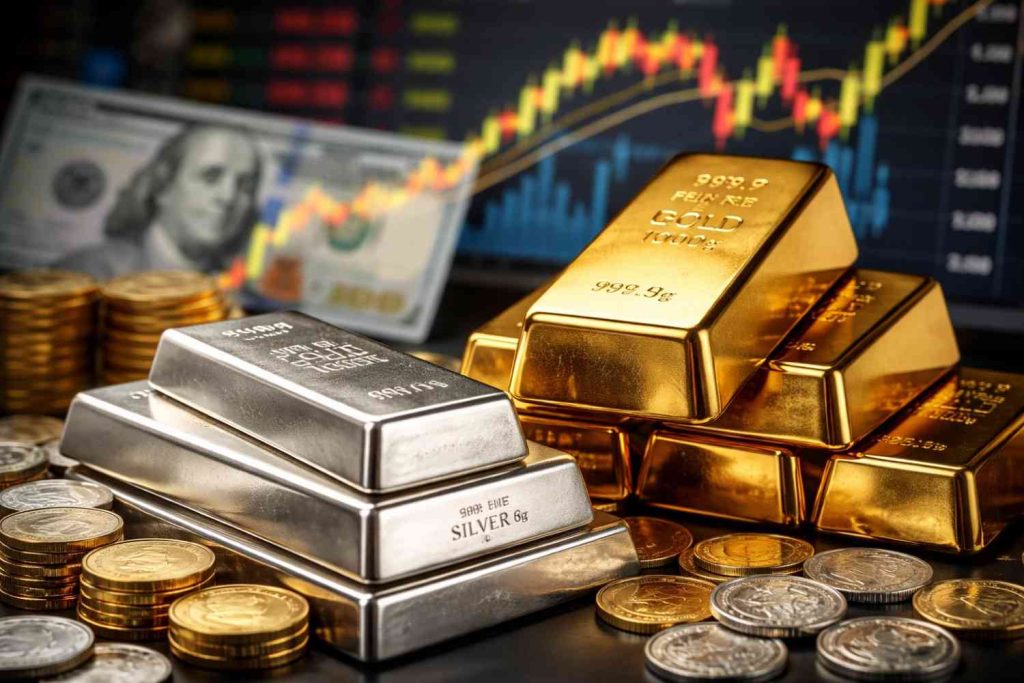


Silver gold prices remain one of the most closely watched indicators in global financial markets, reflecting not only investor sentiment but also broader economic and geopolitical conditions. Traditionally viewed as safe-haven assets, gold and silver play a critical role during periods of uncertainty, inflation, and currency volatility.
As global markets navigate changing interest rates, economic recovery cycles, and geopolitical tensions, movements in silver gold prices continue to attract attention from investors, central banks, and policymakers alike.
Understanding the Importance of Silver and Gold
Gold and silver have been used as stores of value for centuries. Unlike paper currencies, precious metals carry intrinsic value and are not directly controlled by any single government. This unique characteristic makes them particularly attractive during periods of financial stress.
While gold is often viewed as a hedge against inflation and currency depreciation, silver carries a dual identity—acting both as a precious metal and an industrial commodity.
1. Inflation and Currency Fluctuations
One of the most powerful drivers of silver gold prices is inflation. When the purchasing power of currencies declines, investors often turn to precious metals to preserve value.
Gold, in particular, is widely regarded as a hedge against rising inflation, while silver benefits from both inflationary demand and industrial usage. Currency fluctuations, especially movements in the US dollar, also have a direct impact on silver gold prices.
2. Interest Rates and Monetary Policy
Central bank policies play a significant role in shaping silver gold prices. When interest rates rise, non-yielding assets like gold and silver may face pressure, as investors seek higher returns elsewhere.
Conversely, periods of low or stable interest rates often support higher precious metal prices, as the opportunity cost of holding them decreases. Market expectations surrounding future policy decisions frequently influence price trends.
3. Global Economic Uncertainty
Economic slowdowns, recession fears, and financial market volatility often drive demand for safe-haven assets. Silver gold prices tend to rise during periods of heightened uncertainty, as investors seek stability amid unpredictable conditions.
Events such as banking stress, geopolitical conflicts, or global trade disruptions can quickly alter investor behavior, leading to increased demand for precious metals.
4. Industrial Demand and Technological Growth
Silver differs from gold in that it has significant industrial applications. It is widely used in electronics, solar panels, medical equipment, and emerging technologies.
As industries expand and green energy initiatives gain momentum, industrial demand can influence silver prices more strongly than gold. This dual role makes silver gold prices particularly sensitive to shifts in economic growth and technological advancement.
5. Central Bank and Institutional Buying
Central banks around the world hold gold as part of their foreign exchange reserves. Increased central bank purchasing often signals a desire to diversify away from traditional currencies.
Institutional investors also play a key role in influencing silver gold prices through exchange-traded funds and long-term allocation strategies. Their actions can amplify price movements during both bullish and bearish phases.
6. Supply Constraints and Mining Activity
Mining output and supply dynamics directly affect silver gold prices. Disruptions in mining operations, regulatory challenges, or declining ore quality can restrict supply, supporting higher prices.
Unlike gold, much of the world’s silver production comes as a by-product of other metals, making its supply less flexible. This structural constraint can contribute to price volatility during periods of strong demand.
7. Investor Sentiment and Market Psychology
Investor perception plays a crucial role in determining silver gold prices. Market psychology, driven by news, forecasts, and global narratives, can influence buying and selling decisions.
During times of optimism, precious metals may see reduced demand, while periods of fear or uncertainty often trigger renewed interest. This emotional component adds another layer of complexity to price movements.
Gold vs Silver: Key Differences
While gold is primarily used as a store of value and reserve asset, silver’s industrial demand makes it more volatile. Gold prices tend to be more stable over time, while silver often experiences sharper price swings.
Understanding these differences helps investors align their strategies with their risk tolerance and financial goals.
Risks and Considerations for Investors
Despite their reputation as safe assets, silver gold prices are not immune to risk. Short-term volatility, policy changes, and unexpected economic developments can lead to sudden price fluctuations.
Investors should approach precious metals with a long-term perspective, diversified portfolios, and a clear understanding of market dynamics.
Silver gold prices continue to reflect the complex interplay of economic forces, investor sentiment, and global developments. While short-term movements may be influenced by market reactions, the long-term relevance of precious metals remains intact.
As uncertainty and transformation shape the global economy, silver and gold are likely to retain their role as strategic assets for both preservation and growth.
Also Read: Kohinoor Diamond True Story: From Kakatiya Dynasty to the British Crown