


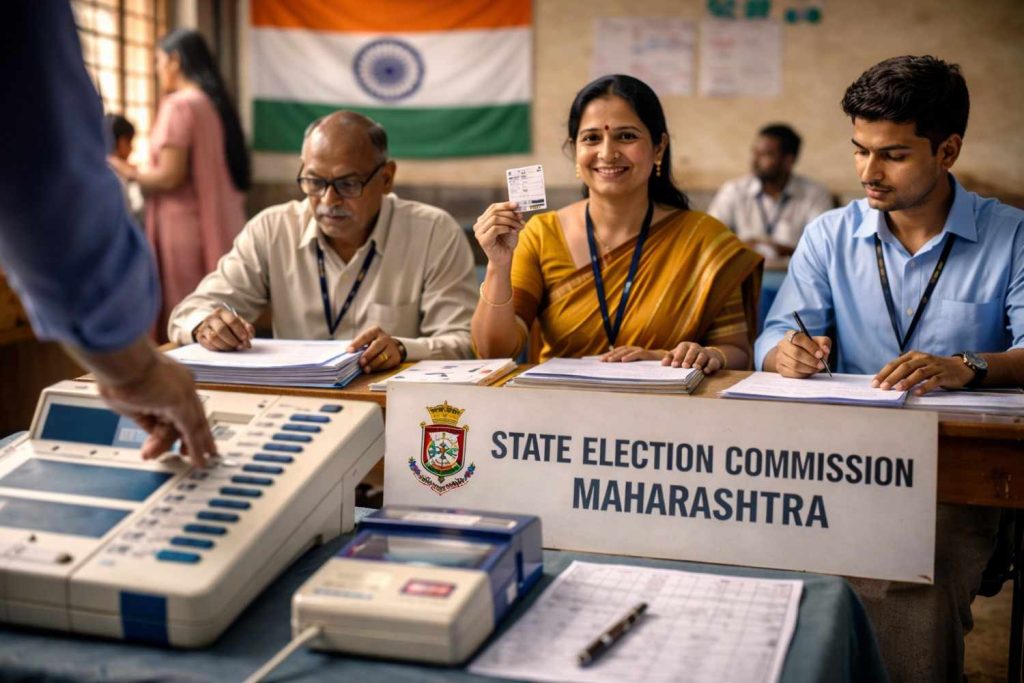


Maharashtra State Election Commission serves as a cornerstone of grassroots democracy by ensuring free, fair, and transparent elections to local self-governing institutions across the state. From municipal corporations to village panchayats, the commission plays a crucial role in strengthening democratic participation at the local level.
Established under constitutional provisions, the Maharashtra State Election Commission functions independently, maintaining electoral integrity while adapting to evolving administrative and technological challenges.
Understanding the Maharashtra State Election Commission
The Maharashtra State Election Commission is a constitutional authority responsible for supervising, directing, and controlling elections to local bodies within the state. Its mandate covers urban and rural local governments, ensuring that democratic processes remain accessible and credible.
By operating independently of political influence, the commission reinforces public trust in the electoral system.
1. Conducting Free and Fair Local Body Elections
One of the most powerful roles of the Maharashtra State Election Commission is conducting elections to municipal corporations, municipal councils, zilla parishads, panchayat samitis, and gram panchayats.
Through structured election schedules, transparent procedures, and strict adherence to electoral laws, the commission ensures that citizens can exercise their voting rights without fear or interference.
2. Upholding Constitutional Mandates
The Maharashtra State Election Commission derives its authority from constitutional provisions designed to strengthen local self-governance. These provisions ensure regular elections, reservation policies, and democratic representation at the grassroots level.
By implementing these mandates effectively, the commission supports decentralized governance and inclusive participation.
3. Ensuring Electoral Transparency and Integrity
Transparency is central to the functioning of the Maharashtra State Election Commission. The commission establishes clear guidelines for nominations, campaigning, polling, and counting processes.
Strict enforcement of the model code of conduct helps maintain fairness and prevents misuse of power during elections.
4. Managing Voter Awareness and Participation
Voter education initiatives form a critical part of the commission’s responsibilities. The Maharashtra State Election Commission conducts awareness campaigns to inform citizens about voting procedures, eligibility, and the importance of participation.
These efforts aim to increase voter turnout and encourage informed decision-making at the local level.
5. Leveraging Technology in Elections
Technology has increasingly influenced the functioning of the Maharashtra State Election Commission. From digitized voter lists to improved monitoring systems, technological integration has enhanced efficiency and accuracy.
Such advancements help reduce errors, improve accessibility, and streamline election management.
6. Addressing Electoral Disputes and Grievances
The commission plays an important role in addressing electoral complaints and disputes. Clear grievance-redressal mechanisms allow candidates and voters to raise concerns related to electoral processes.
Timely resolution of disputes strengthens confidence in the system and ensures accountability.
7. Strengthening Grassroots Democracy
By ensuring regular and credible elections, the Maharashtra State Election Commission strengthens grassroots democracy. Local representatives elected through fair processes play a vital role in addressing community-specific issues and governance challenges.
This bottom-up approach enhances democratic governance and citizen engagement.
Challenges Faced by the Commission
Despite its constitutional authority, the Maharashtra State Election Commission faces challenges such as administrative complexities, legal disputes, and logistical constraints. Urbanization, population growth, and political competition further complicate election management.
Adapting to these challenges requires continuous reforms and capacity building.
Importance of Independence and Neutrality
The independence of the Maharashtra State Election Commission is essential for maintaining credibility. Neutral decision-making and adherence to legal frameworks protect the electoral process from undue influence.
This independence ensures that elections remain a true reflection of the people’s will.
The Maharashtra State Election Commission plays a vital role in sustaining democratic governance at the local level. Through transparent procedures, constitutional adherence, and voter engagement, the commission ensures that democracy thrives beyond state and national elections.
As local governance gains importance in addressing everyday civic needs, the role of the Maharashtra State Election Commission will continue to shape the democratic fabric of the state.
Also Read: Silver Gold Prices: 7 Powerful Factors Driving Market Movement in 2026